WORK
Eight records. One philosophy. Eight different answers.
There isn't a single Bret Santti sound. There shouldn't be.
Every song has its own identity, emotional center and trajectory. My job as a producer isn't to force every artist through the same process. It's to recognize what the music needs—and what it doesn't.
These eight records represent different songs, different challenges and different decisions. Together, they demonstrate something more important than a particular sound.
They demonstrate how I think.
Put on headphones. Press play. And listen for the decisions.
THE FREE FALL
PERFORMANCE & RELEASE
PRODUCER'S NOTES
Some records need more control. This one needed freedom.
The goal was to preserve the energy of the performance without overworking it—letting the musicians play, allowing the arrangement to breathe, and making production decisions that supported the natural momentum of the song.
Sometimes producing means knowing what to change.
Sometimes it means recognizing what's already working—and getting out of its way.
LISTEN FOR
The interaction between the players, the dynamics of the performance, and the way the arrangement builds without sacrificing its natural feel.
PRODUCER • ENGINEER • MIXER • MASTERING • PRIMARY SONGWRITER • ELECTRIC & ACOUSTIC GUITARS • GUITAR SOLO & RIDE-OUT • PIANO • B3 ORGAN • LEAD VOCALS

ONE MORE TIME
RESTRAINT
PRODUCER'S NOTES
Not every song gets better when you give it more.
This record needed discipline. The production was about protecting the song from unnecessary ideas—allowing the vocal, melody and emotional center to carry the weight instead of filling every available space.
Restraint isn't the absence of production.
It's a production decision.
LISTEN FOR
The space in the arrangement, the relationship between the vocal and instrumentation, and how leaving room gives the song greater emotional weight.
PRODUCER • ENGINEER • MIXER • SONGWRITING CREDIT • ELECTRIC GUITAR • PIANO • HARMONY VOCALS
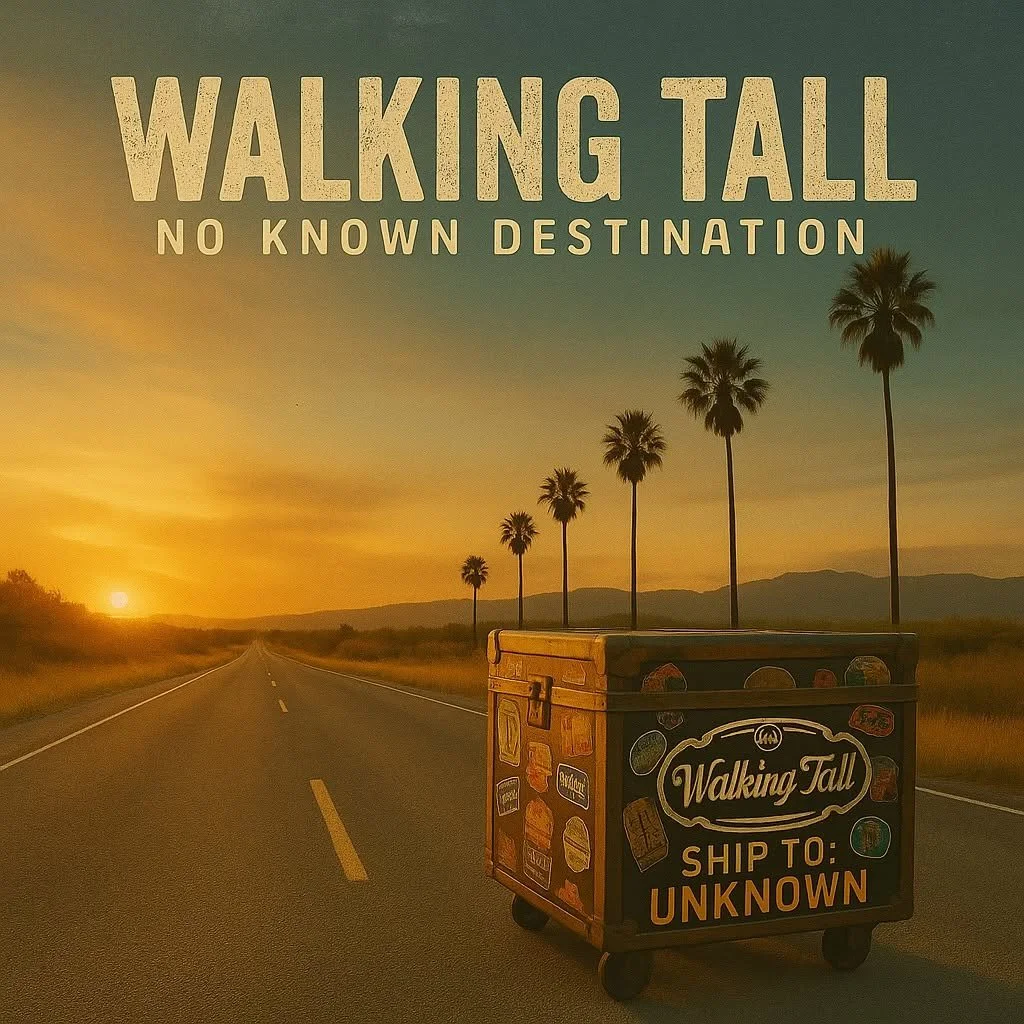
IN ANOTHER LIFE
BALANCE & ENSEMBLE
PRODUCER'S NOTES
Some songs aren't built around one dominant element. They're built around the relationship between everything that's happening.
The challenge here was balance—giving each instrument enough identity to matter without allowing any one part to pull attention away from the whole.
When the players are strong, production doesn't need to make them smaller.
It needs to make them belong together.
LISTEN FOR
How the instruments interact rather than compete, the space each player occupies, and how the ensemble supports the vocal while remaining musically alive.
PRODUCER • ENGINEER • MIXER • SONGWRITING CREDIT • PIANO • FIRST HALF OF GUITAR SOLO • HARMONY VOCALS
STUCK IN YESTERDAY
INTEGRATION
PRODUCER'S NOTES
Some songs are built from elements that could easily compete with one another.
The challenge here was integration—bringing the guitars, keyboards, vocal and arrangement together so the individual parts retained their character while still feeling like they belonged to the same record.
A production can contain a lot of ideas without sounding crowded.
The key is making sure every idea has a reason to be there.
LISTEN FOR
How the guitar and keyboard textures work together, the way the arrangement creates movement without becoming cluttered, and how the individual parts support the song rather than compete for attention.
PRODUCER • ENGINEER • MIXER • SONGWRITING CREDIT • ELECTRIC GUITAR • GUITAR SOLO • PIANO • B3 ORGAN • HARMONY VOCALS
THESE ARE THE GOOD TIMES
SIMPLICITY & IMPACT
PRODUCER'S NOTES
Some songs tell you exactly what they need.
This one didn't need complexity. It needed clarity, energy and immediacy. The production works because the arrangement stays focused on the things that make the song connect—the melody, the groove and the feeling behind it.
Simplicity isn't the absence of ideas.
It's knowing which ideas matter most.
LISTEN FOR
The economy of the arrangement, the way the instrumental parts reinforce the groove and melody, and how the production creates impact without asking the song to carry more than it needs.
PRODUCER • ENGINEER • MIXER • CO-WRITER • ELECTRIC GUITARS • GUITAR SOLO • PIANO • B3 ORGAN • STRING ARRANGEMENTS

LESS AHEAD
TRUTH & EMOTIONAL JUDGMENT
PRODUCER'S NOTES
Some songs don't need to be made bigger. They need to be made more honest.
The decisions here were driven by the emotional truth of the song—protecting the vulnerability in the performance and making sure the production never became more important than what the song was actually saying.
Production isn't always about creating impact.
Sometimes it's about knowing what not to disturb.
LISTEN FOR
The relationship between the vocal and the arrangement, the emotional space around the performance, and how the production supports the lyric without competing with it.
PRODUCER • ENGINEER • MIXER • PRIMARY SONGWRITER • GUITAR SOLO • PIANO • KEYBOARDS • LEAD VOCALS
UNTIL NOW
TRANSFORMATION
PRODUCER'S NOTES
Some songs reveal what they need gradually. Others demand transformation.
This record required building a larger sonic identity around the song without losing the human performance underneath it. Guitars, keyboards, bass, talk box and vocal textures all became part of the palette—but every layer still had to justify its place.
Transformation isn't about adding more for the sake of more.
It's about taking the song somewhere it couldn't reach without production.
LISTEN FOR
The way the guitar layers, harmonies, talk box, keyboards and rhythm section build the record's identity—and how those elements work together without losing the song underneath them.
PRODUCER • ENGINEER • MIXER • SONGWRITING CREDIT • ELECTRIC GUITARS • GUITAR SOLOS & HARMONIES • TALK BOX • BASS GUITAR • B3 ORGAN • KEYBOARDS • HARMONY VOCALS
UNREACHABLE
VISION & SCALE
PRODUCER'S NOTES
Some songs arrive with the potential to become something much larger than the form they begin in.
The challenge is recognizing that potential without overwhelming the song. This record called for scale—layered guitars, acoustic guitar, piano, organ, bass and a larger production arc—but every decision still had to lead toward the same emotional destination.
Scale isn't about making everything bigger.
It's about knowing how large the song wants to become.
LISTEN FOR
The way the arrangement expands across the record, the interaction between acoustic and electric textures, and how the instrumental layers build scale while keeping the vocal and song at the center.
PRODUCER • ENGINEER • MIXER • CO-WRITER • ELECTRIC GUITARS • GUITAR SOLO • ACOUSTIC GUITAR • PIANO • B3 ORGAN • BASS GUITAR • LEAD VOCALS

THE PEOPLE BEHIND THE RECORDS
Great records are collaborative.
I've had the privilege of making music with exceptional musicians who understand that great playing isn't about drawing attention to themselves. It's about recognizing what the song needs and bringing something to the record that makes it better.
The records featured here were created alongside my longtime Walking Tall partner and co-writer James Tuttle, with contributions from exceptional musicians including Seth Rausch, John Thomasson, Ben Helson, Dan Hochhalter, Brandon Bankes and Jim Riley.
Collectively, their careers include work with artists such as Don Felder, Keith Urban, Little Big Town, Dierks Bentley, Rascal Flatts, Dolly Parton, Sheryl Crow and many others.
Those associations aren't what make these records good. They simply illustrate something I've been fortunate to experience throughout my career:
Great musicianship matters.
And great musicians still need a record worth serving.
EIGHT RECORDS.
ONE STANDARD.
Different songs. Different instrumentation. Different challenges. Different answers.
There shouldn't be a formula for making records. There should be a standard for making decisions.
Every arrangement choice. Every performance. Every sound. Every edit. Every mix decision ultimately comes back to the same question:
DOES IT SERVE THE SONG?
WHAT COULD YOUR RECORD BECOME?
You don't need someone to turn your music into somebody else's.
You need someone capable of hearing what's already yours—and recognizing how far it could go.